In a week that has seen some of the best sport in decades, we wait with bated breath for a pretty tense weekend. If you have no interest in football or tennis, please scroll down now…
Apparently the
England match last Sunday is being hailed as our (English) greatest WC match since 1966 (or was it 1066?) And the nation holds its breath for tomorrow at 10pm. Let's hope that Fifa can manage things without anymore presidential interference!
The TENNIS tho! I mean, come ON!! Who didn’t feel emotional watching Fery's total disbelief when he won and then going on to win again (Love that Murray Mount is currently being called Arthur’s seat).
I thought the Novak;Felix match was better than a blockbuster movie for its drama and twists and turns: (were you, like me, willing Felix to victory? He was SO close). Djokovic described it as one of the greatest matches he has ever played at Wimbledon and I honestly don’t know how we are all going to survive this weekend!
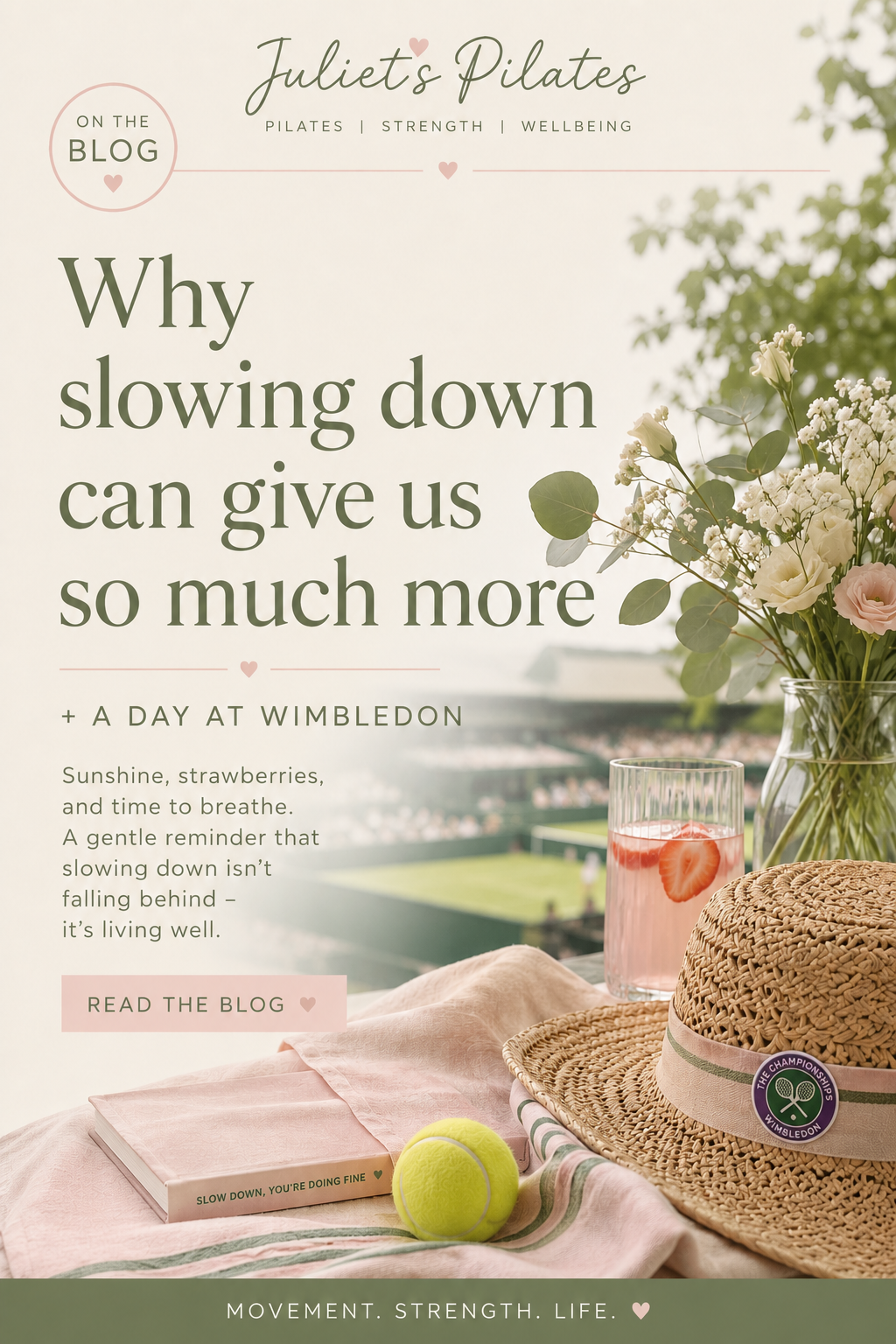
I am lucky enough to be going to Wimbledon tomorrow and while our seats aren’t on centre court, we intend to go out to Arthur’s seat for the Women’s final so if you’re watching, look out for me!
(Wimbledon inspired circuits class incoming... )
As for the TdF, those athletes are super human. I have been following how they are managing in this heat and love that some of the teams are following in vans with ice baths in the back. They have been climbing in fully clothed and using their cycle helmets to scoop water over their heads. When they are on the stationary bikes, warming up or cooling down, they have mini ice baths on the handle bars to rest their arms in. Either which way, to see how they power up hill after hill while not showing any obvious signs of stress - well, it's insane!
Hip Flexors
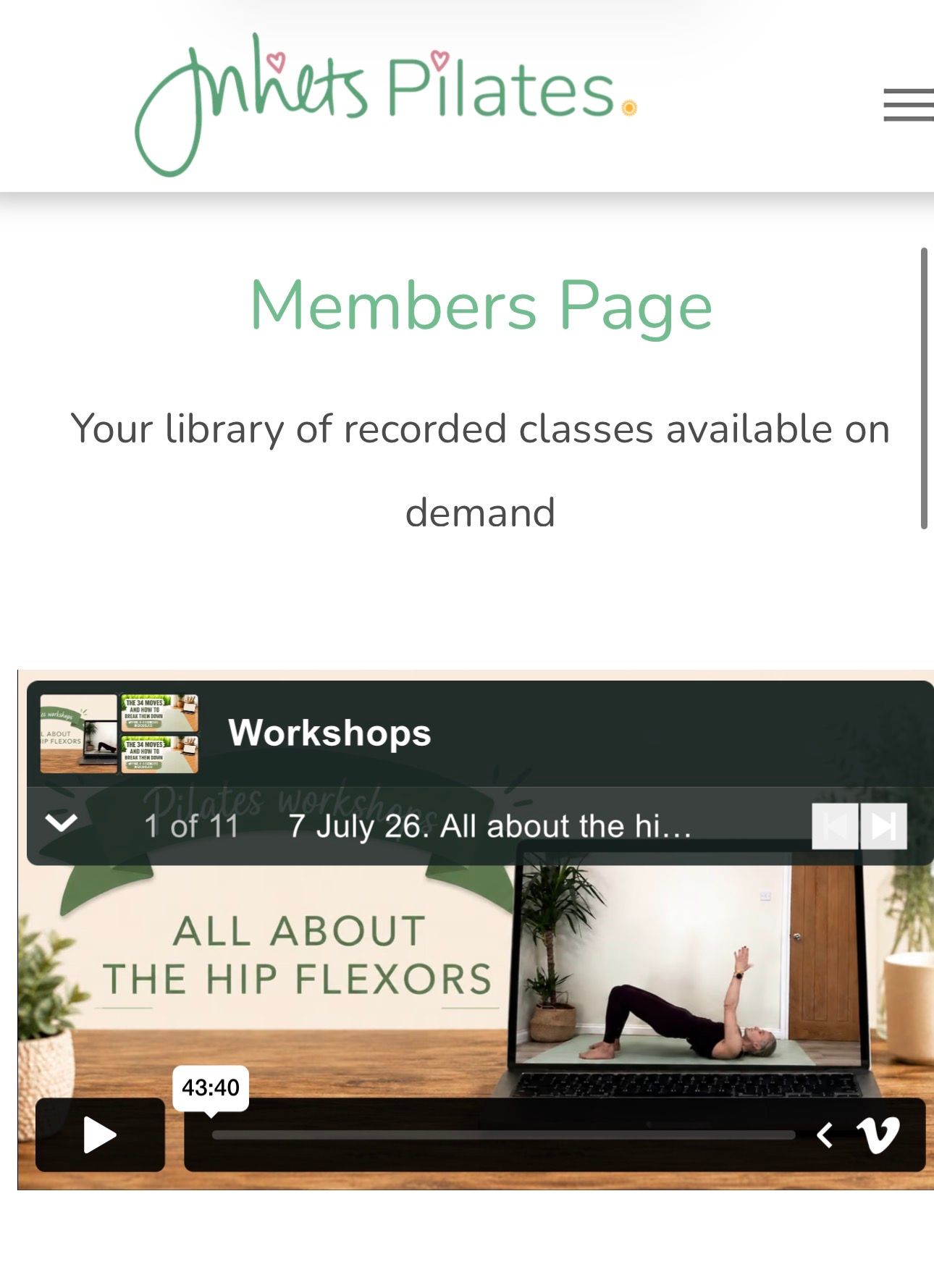
This week I decided to run a workshop on the hip flexors because it's such a common issue, and one I see time and time again in class. I wanted to spend some time researching the best ways to understand why these muscles become overactive and, more importantly, how we can encourage them to relax. The key is learning how to connect more effectively to our centre so the hip flexors aren't left doing all the work.
The full workshop is now in the members' library and is available to everyone with a subscription, but I thought I'd share some of the key points here. If you've ever felt that familiar burning sensation at the front of your hips during seated exercises or when lying on your back with your legs raised, this might help.
The hip flexors are the group of muscles that lift your thigh towards your torso and help bend at the hip. They're supposed to work in Pilates—we need them—but the problem comes when they take over and dominate the movement instead of working alongside the rest of the body.
One of the simplest things you can do is sit on a little height. A folded blanket, cushion or yoga block tips the pelvis slightly forwards so your sit bones can take the weight more evenly. Almost instantly, this reduces the pull through the front of the hips and makes it much easier to sit tall.
You do not need to fight to always have straight legs. If your hamstrings are tight, forcing straight knees often pulls the pelvis backwards and rounds the spine. A slight bend in the knees usually allows you to find a much better pelvic position and a much longer spine, making the exercise far more effective.
I often ask people to think about their thighs becoming heavy rather than trying to lift them. Imagining the thigh bones dropping into the hip sockets helps reduce unnecessary gripping at the front of the hips and encourages the deep abdominal muscles to provide more support.
Before any movement begins, it's important to organise your posture. I often cue, "Grow tall before you move” or “Long spine”. I also use "shoulders above hips". When the rib cage is stacked over the pelvis, the postural muscles can do their job properly instead of asking the hip flexors to hold you upright. Imagine stacking your spine.
Your breathing can make a huge difference too. You know how I always warn that holding your breath creates tension so with Pilates breath, breathing into the sides and back of the rib cage, then gently connecting to the deep abdominals as you exhale, often reduces unnecessary tension. Rather than forcefully pulling your tummy in, think of allowing your centre to switch on naturally.
Remember too that longer legs create a much bigger challenge. There is no prize for choosing the hardest version of an exercise. Whether your knees are bent, you're working in tabletop or lifting one leg at a time, choose the variation where you feel strong, controlled and able to move well. Leave your ego outside the door and work at the level that's right for you.
Another cue I use a lot is to stop thinking about lifting your legs. Instead, imagine your centre supporting you so the legs simply become lighter and float. It's a small change in thinking, but it often changes which muscles take the lead. Let your centre support your as your legs lift.
Your pelvic position also matters. If your pelvis is tucked under before you even begin, the hip flexors start from a less efficient position and usually grip much harder. Aim to feel your weight through your sit bones, maintain your natural lumbar curve (very slightly feel the back of your waistband and avoid arching away from it) and continue lengthening through the crown of your head.
It's also worth noticing whether you're holding your legs up for longer than necessary. Sometimes we prepare for an exercise, hold the legs there while instructions are given, and by the time we actually start moving the hip flexors are already exhausted. Whenever possible, lift, perform the movement and lower again rather than holding the position unnecessarily.
Finally, remember that overworked hip flexors are often simply trying to do everyone else's job. As we develop stronger deep abdominals, glutes, hamstrings, spinal extensors and the muscles around the outside of the hips, the workload becomes much more evenly shared and the hip flexors can finally relax.
You'll often hear me use cues such as, "Sit tall through your sit bones," "Let the front of the hips stay soft," "Lengthen before you move," "Imagine your thigh bones dropping into the pelvis," and "Allow the legs to become lighter rather than lifting them." They all encourage the same thing—letting movement begin from your centre rather than from the front of the hips.
So, to wrap up, try not to sacrifice your pelvic alignment just to straighten your knees. Avoid leaning backwards to compensate, gripping the hip flexors before you've even started, holding your breath, or choosing a progression that's beyond what you can control. Pilates isn't about making the exercise harder—it's about making the movement better.