In a week that saw some amazing tennis and cycling and our World Cup hopes crash, I took some inspiration from a wonderful day out.
I don't know about you, but as the heatwave continues, it already feels like an endless summer, even though schools have not yet broken up and we still have the full holidays ahead of us. I have my regular summer highlights: Wimbledon, my beloved New Forest show and the outdoor touring theatres. While our gardens sadly wilt with lack of water and the sun continues to sizzle, this Summer is shaping up to be a cracker.
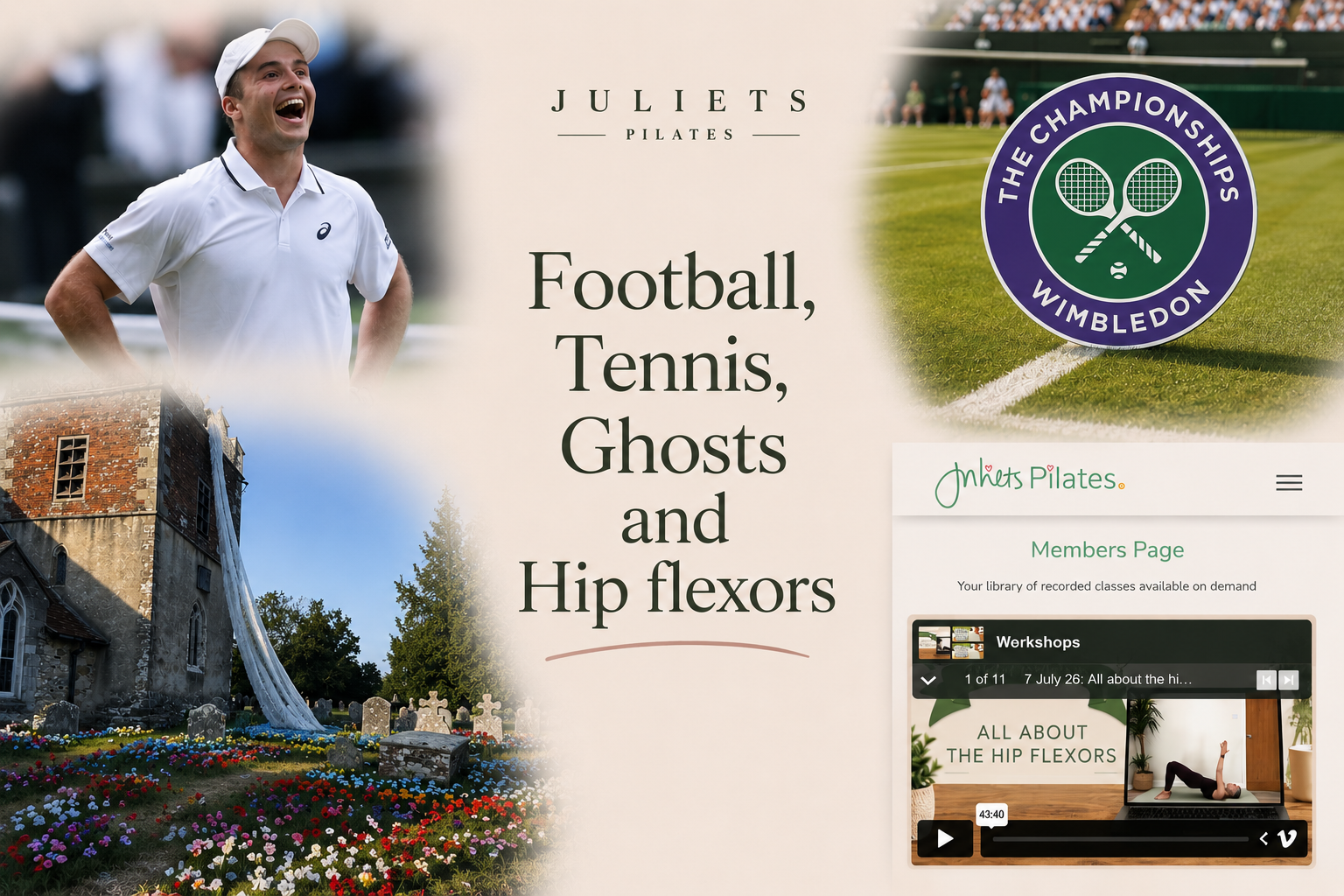
Last Saturday, I was fortunate enough to go to Wimbledon courtesy of a very generous friend who got luckier in the ballot than I did.
It was one of those effortlessly perfect days from start to finish. Easy parking, space on the train, friendly people who offered to taxi share, no queuing and straight into court 1.
I had never really given thought to the wheelchair mens' doubles finals if I am completely honest but OH MY GOODNESS, what a treat we had. The skill, the level of play, the atmosphere, the crowd support - it was a privilege to be a part of it and something I will never forget. To see our British duo successfully defend their title yet again - the roar of the fully packed stands nearly blew my straw boater off and to see Alfie and Gordon hugging at the end brought me to tears! World class tennis and a British win to boot. It was so exciting that we decided we needed a lunch stop to gather ourselves.
So I don't know if I am very out of touch but this was a a funny thing. You walk into the food hall and scan your bank card, then you select what you want and just walk out (no more scanning) and somehow, what you are carrying gets zapped. I would have wondered at this more but I didn't want to look like some clueless old biddy on her first trip to the smoke so I just accepted it..
Now, on a Friday (as I went to Wimbledon on the Saturday) I teach a weights class online which I usually do in full. I then generally take the same class on to Limewood where I demo but don't do, but for some reason that I cannot explain (maybe feeling extra buoyant after a few weeks of feeling ill and not doing as much) I decided to do the full class again. Legs. Weights and legs. Please do not do this!
Fast forward to the next day and by the time we sat for lunch, I was having difficulty bending my knees and with tables already full, spied a low wall around a garden that would do nicely. Well, it would if your muscles weren't so tight that you could not bend your knees; it took me a long time to sit, and a lot longer to stand again, as I accepted the fact that I had been hit hard by DOMS (the delayed onset of muscle soreness) that I knew perfectly well would only get worse over the next 24 hours. Oh yes, it sure did!
However that did not detract from the best day out. We spent some time sitting on Murray Mount watching the ladies' finals and a welcome breeze kept the day manageable and we also enjoyed watching the under 18's finals which again, was thrilling.
We saw Sasha Baron Cohen (dressed in a suit, not in Ali G get up which he caused a stir with the following day) and while walking the concourse by centre court, were aware of the crowds gathering and extra security so, while no-one was quite sure what was happening, we decided to hang around to find out. After a short wait, we were rewarded by a wave from Princess Catherine as she walked the bridge overhead.
When the matches had finished we headed to the tea terrace to eat our strawberries and have a much needed cup of tea. Interestingly enough, getting a cup of tea at the Tea Terrace is not quite the simple task one might think: Champagne and Pimms yes, Tea not so. Anyway, we just sat. A summer's evening. No need to rush off or be anywhere. Just a chance to be. It was priceless. We both acknowledged that we did not need to leave yet - we could stay right where we were, in the beautiful gardens of Wimbledon on a stunning summer's evening, chatting over tea and strawberries, discussing the tennis and just being in the moment. As someone whose default is rushing, this was a real joy.
We chose to walk back to the station and the perfect day continued. It is such a pretty area and there was a real buzz of energy in the air as the outside bars were starting to fill up for the England;Norway match. We stopped for supper en route, no rush, no need to be anywhere by any time and then rode an almost entirely empty train home. A magical day from start to finish.
A couple of days later I took my dogs to the beach. Darling Bertie, almost 13, very deaf with limited vision and wobbly back legs, set off on a mission. I had intended to go to one area but he started on his march, ignoring me and Gretl, not stopping until he was knee deep in the water at which point he just laid down and there he stayed. I paddled in to chat to him but he was so peaceful, staring out to sea, with his eyes half closed, that I left him to his thoughts. I think he was having his own Wimbledon tea lawn moment. He stayed like that for over half an hour, hardly moving and I just sat on the beach watching him while Little G fussed about. It was nearly 9pm, still light, still very warm, so peaceful and so calm. Again, another perfect moment to just stop and be and a very precious memory of something so simple yet so fulfilling.
One of the (many) things that I reflected on was how good it felt to slow down, to stop, to be and I chose to bring that into a couple of my classes. While I taught in that style for the first class, I didn't reference it, testing myself a bit but in yesterday's All levels mat (recorded, in the library) I talked about slowing down and below, are some of my thoughts around it.